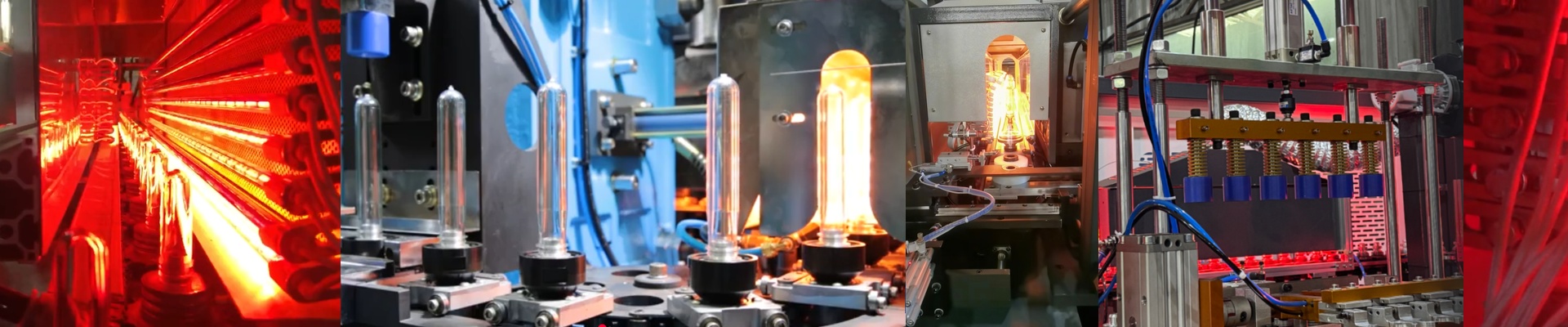
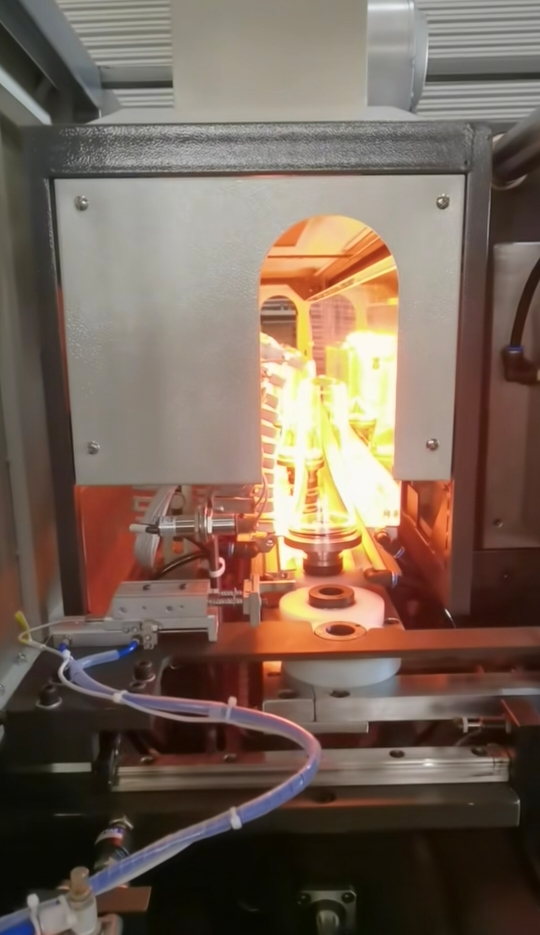
Your SIPA SFR 20 rotary blow molder is the workhorse of the shift. But when the heating tunnel starts acting up—slow warm-ups, preform temperatures that drift, or a lamp that just quits—you don’t just lose minutes. You lose good bottles and margin. You need a heater tube that matches the SFR 20’s geometry and thermal behavior, not some generic guess.
What matters, technically
We build the SFR 20 heater tube as a direct-fit spare: quartz infrared emitter, rated for the voltage and wattage the machine expects, with an R7s connector and dimensions that match the original mount and reflector path. The geometry puts the hot zone exactly where the preform wall needs it, so heating repeats across the full rotation. In practice, that means you stabilize faster after startup and keep the temperature spread tight from preform to preform.
Why this matters on an SFR 20
On a rotary line like the SFR 20, the heater tube isn’t just warming plastic. It sets the heating rate and distribution that make stretch blow molding repeatable. Match the tube, and the tunnel comes back to spec fast. You spend less time chasing rejects and more time running full cycles. Expect quicker return-to-pressure after a lamp change, fewer temperature-related rejects, and changeovers that behave the way they should. Over a year, that means fewer emergency stops, less scrap, and less overtime spent on rework.
The shop-floor details
Installation is straightforward, but the quartz tube is brittle. Don’t touch the tube surface. Use clean gloves, and confirm reflector alignment before you close things up. Also, verify the exact voltage and wattage at the terminal block. Run the wrong rating and you shorten lamp life—and throw off the heating curve. If you run 24/7, keep a spare on the shelf. When a lamp goes, you want to swap, not wait.