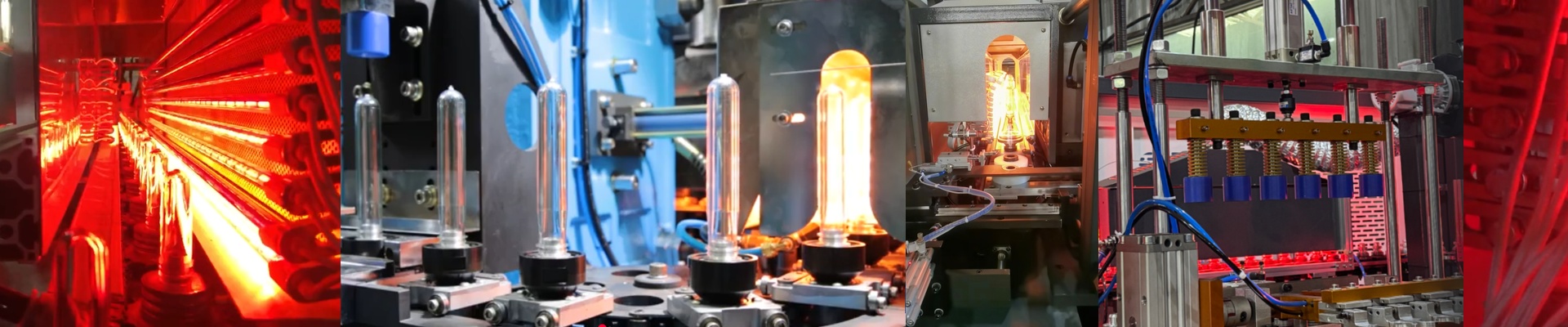
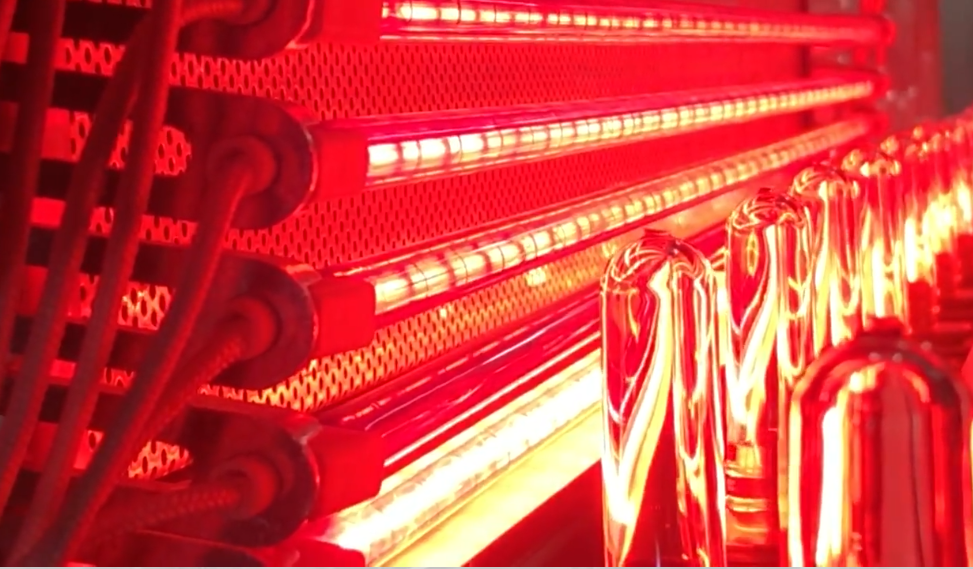
Out on the blow molding floor, an SMF blower heating tunnel doesn’t care what parts are on the way. The second a lamp starts to dim or a zone drifts, preform heating falls off spec—and you’re suddenly chasing rejects. We built our replacement lamp for SMF blowers to get you back to heating that’s stable and repeatable, quickly.
What matters under the hood
This is a short-wave infrared emitter, specced to match the thermal profile and electrical constraints of SMF-style heating modules. Quartz envelope, filament layout—everything is chosen so the preform neck and body ramp fast and stay under tight control. Wattage, voltage, and base are matched to the original: common variants are 1500W and 2000W at 230V with R7s connectors, and the lengths line up with standard tunnel banks. The payoff is predictable heat density cycle after cycle, so you’re not fighting uneven wall thickness or crystallization.
Why it fits in the real world
Compatibility isn’t a slogan here—it’s a drawing and a test. We engineered the lamp to drop straight into SMF-based blow molders across the major platforms, including Sidel Matrix, Krones Contiform, and Husky HyPET systems. It’s a 1:1 fit on OEM envelope dimensions, mounting, and wiring.
What that translates to on the line: fewer changeover hours, less scrap from temperature swings, and stretch behavior that stays consistent in PET bottles. We’ve seen units run 5,000+ hours with less than 5% output drop, keeping the heating curve flat when the schedule is tight.
The install details that keep it honest
Installation is straightforward, but alignment is where people get tripped up. Check the lamp position in the reflector, and take a hard look at reflector condition—pitting or oxidation changes the spot profile and can create hot spots. Confirm voltage at the terminal, and use the right ceramic holder and lead wire rated for the temperature and vibration inside the tunnel.
After replacement, give it a proper warm-up window. Let the zone PID settle before you call it good—or bad. If the machine runs in a high-humidity washdown area, protect the connections and pick the appropriate IP-rated hardware. That’s how you keep downtime off the board.